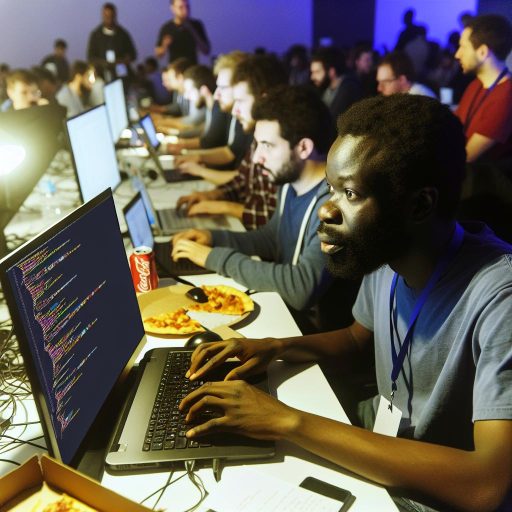




Introduction to Coding Challenges and Their Relevance in Skill Development
What Coding Challenges Are
Coding challenges are problem-solving exercises that test programming skills.
These challenges range from algorithm puzzles to real-world coding tasks.
They often require logical thinking, creativity, and efficient code writing.
Moreover, platforms like CodeChef and HackerRank host popular coding contests.
Developers worldwide participate to hone their expertise and compete globally.
How Coding Challenges Enhance Skills
Coding challenges improve algorithmic knowledge and problem-solving speed.
They encourage developers to learn new languages and libraries actively.
Besides, consistent practice builds confidence in tackling complex projects.
Through feedback and test cases, coders identify and fix their mistakes quickly.
Challenges foster critical thinking and structured coding approaches.
Significance of Coding Challenges for Nigerian Developers
Nigerian developers gain exposure to international coding standards through challenges.
This exposure bridges the gap between academic knowledge and practical skills.
Competitions like Andela’s coding tests provide pathways to remote global jobs.
By solving diverse problems, developers adapt to various industry requirements.
Hence, coding challenges play a vital role in career growth and global employability.
Unlock Your Unique Tech Path
Get expert tech consulting tailored just for you. Receive personalized advice and solutions within 1-3 business days.
Get StartedOverview of the Nigerian Tech Ecosystem and Demand for Global-Standard Skills
Vibrant Growth in Nigeria’s Technology Sector
Nigeria’s technology sector thrives with rapid innovation and entrepreneurial energy.
Tech hubs and startups proliferate mainly in Lagos.
They also grow strongly in Abuja and Port Harcourt.
Additionally, companies like Interswitch and Andela contribute significantly to this growth.
This vibrant ecosystem attracts investments from both local and international sources.
Consequently, the demand for skilled developers continues to surge nationwide.
Increasing Demand for Global-Standard Technical Skills
Nigerian companies constantly seek developers with up-to-date coding and problem-solving skills.
Furthermore, global technology firms require Nigerian talent capable of delivering world-class solutions.
Therefore, technical expertise aligned with international standards becomes vital for career advancement.
Remote work and outsourcing opportunities also encourage developers to hone global competencies.
As a result, acquiring these skills supports seamless integration into the global tech workforce.
Supportive Infrastructure and Training Initiatives
Numerous coding bootcamps and training programs equip developers with relevant skills.
Institutions like Decagon and Andela provide rigorous training aligned with global market needs.
Moreover, tech communities regularly organize hackathons and coding challenges to foster growth.
Unlock Premium Source Code for Your Projects!
Accelerate your development with our expert-crafted, reusable source code. Perfect for e-commerce, blogs, and portfolios. Study, modify, and build like a pro. Exclusive to Nigeria Coding Academy!
Get CodeThese events promote continuous learning and encourage developers to improve problem-solving abilities.
Hence, developers receive ample support to meet the rising demand for top-tier technical skills.
How Coding Challenges Enhance Problem-Solving and Algorithmic Thinking
Sharpening Analytical Skills
Coding challenges push developers to analyze problems carefully before coding.
They require breaking down complex tasks into manageable parts.
Consequently, developers improve their ability to identify key issues quickly.
This skill is essential for solving real-world coding problems efficiently.
Strengthening Algorithmic Thinking
Algorithmic thinking helps developers design step-by-step solutions.
Coding challenges encourage creating algorithms that optimize performance.
Moreover, they teach recognizing patterns and applying suitable data structures.
As a result, developers become adept at crafting scalable and efficient code.
Encouraging Logical Reasoning and Creativity
Logical reasoning is critical when deciding the best approach to solve problems.
Challenges stimulate creativity by presenting diverse scenarios and constraints.
Therefore, developers experiment with multiple strategies to find the optimal answer.
This process builds resilience and adaptability in coding practices.
Building Confidence Through Practice
Repeated exposure to coding problems fosters confidence in tackling unfamiliar tasks.
Developers like Emeka Okafor have noted increased self-assurance after regular practice.
Likewise, platforms such as CodeForge Africa offer diverse challenges to hone skills.
Thus, coding challenges prepare developers to face global job requirements confidently.
- Enhances critical thinking by dissecting problems effectively.
- Improves algorithm design and optimization skills.
- Boosts logical reasoning and creative problem-solving.
- Builds confidence to approach complex real-world coding tasks.
See Related Content: The Benefits of Participating in Online Coding Competitions
Role of Competitive Programming in Building Confidence and Technical Expertise
Boosting Problem-Solving Skills
Competitive programming sharpens developers’ problem-solving abilities effectively.
It requires breaking down complex problems into manageable parts.
Consequently, developers learn to analyze issues quickly and thoroughly.
This process strengthens logical thinking and algorithmic understanding.
Enhancing Coding Proficiency
Regular participation improves coding speed and accuracy significantly.
Developers like Chinedu Eze consistently refine their syntax and code structure.
Moreover, they gain familiarity with multiple programming languages.
This versatility prepares them for diverse technical job requirements worldwide.
Building Confidence Through Competition
Competing in timed challenges boosts self-confidence gradually.
For example, Adaobi Nwosu felt more assured after winning local contests.
Encounters with diverse problems reduce anxiety during real-world tasks.
Developers gain trust in their abilities to deliver quality solutions under pressure.
Exposure to Global Standards and Innovations
Competitive platforms connect Nigerian developers with international peers.
This interaction exposes them to emerging technologies and best practices.
Consequently, they adapt quickly to global tech industry trends.
Such exposure improves their competitiveness in foreign job markets.
Networking Opportunities and Career Growth
Through competitions, developers meet recruiters from companies like Flutterwave and Paystack.
These events open doors to internships and remote working roles.
Furthermore, participation in recognized contests enhances resumes impressively.
Hence, competitive programming acts as a bridge to global career opportunities.
Explore Further: The Top Coding Challenge Platforms for Nigerian Coders to Boost Skills
Improving Coding Speed and Accuracy Through Timed Challenges
Building Focus Under Pressure
Timed coding challenges help developers enhance their focus during problem-solving sessions.
For example, Emeka, a frontend engineer at CocoaTech, practices daily to sharpen his concentration.
As a result, he manages to write code efficiently even under tight deadlines.
This skill is essential when working on global projects with strict delivery timelines.
Enhancing Rapid Problem Recognition
Timed challenges train developers to quickly identify core issues in coding tasks.
Lola, a backend engineer at SigmaSoft, states that time constraints force her to prioritize critical errors.
Therefore, she reduces time wasted on less impactful bugs.
Her ability to triage problems improves significantly as a result.
Boosting Accuracy Through Repetition
Repetitive, timed exercises help programmers minimize mistakes over time.
Kunle, who works at Nexon Labs, notes that timed drills help him reduce syntax and logic errors.
Moreover, this repetition instills an instinct for writing clean and correct code.
Such accuracy is vital when collaborating on international teams with high code quality standards.
Developing Efficient Time Management Skills
Timed challenges teach developers to allocate time wisely among tasks.
For instance, Amina, a software engineer at AfroLogic, learns to balance coding with testing within set limits.
This skill helps her avoid spending excess time on minor details.
Consequently, she delivers well-rounded solutions quickly and reliably.
Effective Strategies for Using Timed Challenges
- Set realistic time limits based on personal skill levels to avoid frustration.
- Review completed code immediately to identify areas for improvement.
- Use various platforms like DevArena and CodeSprint Nigeria for diversified challenges.
- Gradually decrease time limits as speed and confidence increase.
Ultimately, consistent practice under timed conditions equips Nigerian developers for the demands of global tech roles.
Find Out More: How Nigerian Coders Can Excel in Hackathons and Competitions
Exposure to Diverse Technologies and Real-World Scenarios via Challenges
Expanding Technical Skills Through Coding Challenges
Coding challenges immerse Nigerian developers in a wide range of technical topics.
They encounter programming languages such as Python, JavaScript, and Go.
Challenges also cover frameworks like React, Django, and Spring Boot.
This exposure helps developers quickly adapt to new tools and environments.
Moreover, it strengthens problem-solving abilities across different technology stacks.
Simulating Real-World Work Environments
Coding challenges often mimic tasks faced in actual software development roles.
For instance, they include debugging, algorithm optimization, and database management.
These scenarios teach developers to write efficient, maintainable code under pressure.
They also learn to collaborate by participating in team-based coding contests.
Consequently, candidates like Emeka Okoye and Amina Yusuf gain practical experience.
Building Confidence for Global Job Markets
By solving diverse problems, Nigerian developers grow confident in their technical prowess.
Leading companies such as Andela and TechEdge recognize these skills.
Coding challenges thus serve as a bridge to opportunities in international firms.
Additionally, regular practice ensures familiarity with industry-standard coding practices.
Ultimately, this preparation equips developers to excel in global technical interviews.
Uncover the Details: The Importance of Time Management in Solving Coding Challenges
Networking Opportunities and Community Engagement Through Coding Platforms
Connecting with Global Developers
Coding platforms enable Nigerian developers to connect with professionals worldwide.
Through these connections, developers gain exposure to diverse programming methods.
Moreover, interaction on forums encourages knowledge exchange and skill improvement.
Platforms like DevHub and CodeSphere host global coding communities actively.
Therefore, Nigerian developers can collaborate on projects beyond their borders.
Building Professional Relationships
Engaging consistently on coding sites helps developers build meaningful professional networks.
Such relationships can lead to mentorship and job referrals internationally.
For example, Ifeoma Chukwu connected with a Berlin-based startup through HackerArena.
Besides networking, these connections cultivate teamwork skills required in global workplaces.
Furthermore, developers learn effective communication through community interactions.
Participating in Community Challenges and Events
Many coding platforms organize community challenges that encourage collaboration.
These events help Nigerian developers showcase their talents to potential employers.
Additionally, hackathons increase visibility and allow direct feedback from industry experts.
Companies like LuminaTech often scout top performers from such global competitions.
Hence, participating regularly boosts confidence and enhances portfolios.
Accessing Resources and Learning Together
Coding communities share valuable resources like tutorials, problem sets, and best practices.
This collective knowledge accelerates learning and keeps developers updated on trends.
Besides individual growth, it fosters a sense of belonging and motivation.
Groups on platforms like CodeNest host weekly study sessions and code reviews.
Consequently, Nigerian developers overcome learning barriers through collaborative support.
Expanding Career Opportunities Through Community Engagement
Active community engagement creates pathways to freelance projects and full-time roles.
Employers appreciate candidates involved in reputable coding communities.
Chinwe Nnaji secured a remote job with a London-based fintech firm after forum participation.
Coding platforms serve as gateways to global job markets and professional growth.
Bridging the Gap Between Theoretical Knowledge and Practical Application
Importance of Hands-On Experience
Theoretical knowledge provides a solid foundation for software development.
However, practical skills are essential to excel in real-world projects.
Coding challenges create opportunities for Nigerian developers to apply learned concepts.
They simulate real-world problems that require critical thinking and innovation.
Therefore, developers gain confidence through repeated practice and problem-solving.
Enhancing Problem-Solving Abilities
Coding challenges often present unfamiliar problems to solve efficiently.
As a result, developers improve their analytical and logical reasoning skills.
Daily exposure to diverse problems builds adaptability in algorithmic thinking.
Moreover, tackling these problems sharpens debugging and optimization expertise.
This continuous learning environment encourages persistence and creative solutions.
Building Practical Skills Through Collaborative Competitions
Many Nigerian developers participate in online coding contests and hackathons.
These events foster teamwork and communication alongside technical abilities.
Collaborating with peers from different backgrounds mirrors global development teams.
It also helps developers learn various coding styles and best practices.
Consequently, participants become better prepared for multinational work environments.
Real-World Application Through Project-Based Challenges
Some platforms provide projects that mimic industry-level tasks.
For example, developers build APIs, user interfaces, and database integrations.
These projects reveal practical issues such as performance and security concerns.
They also showcase the importance of writing clean and maintainable code.
Thus, developers like Amaka Okeke and Kunle Adeyemi hone relevant, marketable skills.
Support From Nigerian Tech Companies and Mentorship
Tech firms such as Andela Nigeria and Flutterwave promote coding challenges.
They offer mentorship programs that connect novices with experienced developers.
Mentors provide feedback and share industry insights to guide practical learning.
This support transforms theoretical knowledge into effective software development practice.
Such initiatives accelerate Nigerian developers’ readiness for global roles.
Success Stories of Nigerian Developers Who Leveraged Coding Challenges for Global Roles
Fostering Opportunities Through Coding Competitions
Nigerian developers often join coding competitions to test their skills against global peers.
These platforms expose them to real-world problems and demanding technical scenarios.
Among them, Chinedu Okoro gained attention after excelling on HackerRank.
His consistent performance landed him a remote role at Sequoia Technology, a Silicon Valley firm.
Likewise, Adaobi Eze showcased her problem-solving skills through LeetCode challenges.
This visibility helped her secure an internship with Google’s Africa engineering team.
Such achievements demonstrate how coding contests open doors worldwide.
Career Growth Fueled by Recognition and Skill Validation
Beyond fame, coding challenges provide verifiable proof of a developer’s expertise.
Oluwasegun Adebayo used his Topcoder rankings to advance within Microsoft Nigeria.
His award-winning submissions impressed recruiters and boosted his career path.
Similarly, Ifeoma Ibem’s success on Codeforces accelerated her hiring at ThoughtWorks UK.
She credits continuous challenge participation for improving her algorithmic thinking.
Therefore, coding platforms serve as both learning grounds and resume enhancers.
Building Networks and Accessing Mentorship
Participation in coding events connects Nigerian developers to global communities.
Through forums and contests, they establish relationships with mentors and peers abroad.
Chuka Nwankwo found mentorship via CodeChef’s international leaderboard discussions.
Consequently, he received guidance that enabled his transition to a software engineer position in Canada.
Similarly, Tosin Ajayi benefitted from collaboration on coding challenge teams with members worldwide.
This network improved her job prospects in emerging tech markets.
Examples of Notable Platforms and Their Nigerian Success Stories
- HackerRank:
Used by many Nigerian developers, including Emeka Obi, who joined Amazon AWS after excelling here.
- LeetCode:
Helped Amina Suleiman prepare for technical interviews, leading to a role at Spotify.
- Codeforces:
Fostered competitive coding skills for David Eze, now employed at Intel in the USA.
- CodinGame:
Empowered Ngozi Ibe with unique problem-solving scenarios that caught the attention of global startups.
Through these platforms, Nigerian developers consistently prove their global competitiveness.
Tips for Nigerian Developers to Maximize the Benefits of Coding Challenges
Choose Challenges That Match Your Skill Level
Select coding challenges that align with your current skills and goals.
This ensures you stay motivated and build confidence effectively.
Gradually attempt more difficult problems to push your learning boundaries.
Practice Consistently and Track Your Progress
Regular practice sharpens your problem-solving skills and coding speed.
Set aside dedicated time daily or weekly for coding challenges.
Keep a log of your solved problems and challenges to monitor growth.
Focus on Understanding Algorithms and Data Structures
Mastering algorithms and data structures is essential for global job markets.
Analyze each problem’s underlying concepts rather than rushing to solutions.
For example, study sorting methods, recursion, trees, and graph algorithms deeply.
Participate in Online Coding Platforms and Competitions
Engage with platforms like CodeChef Nigeria, HackerRank, and LeetCode regularly.
Join coding contests to simulate real interview conditions and improve time management.
Compete with developers globally to gain exposure and benchmarking opportunities.
Collaborate and Learn from the Community
Join local and online developer groups such as LagosDev or AbujaCoders.
Discussing challenges and solutions boosts understanding and networking.
Accept constructive feedback graciously to refine your coding approach.
Apply Learned Skills to Real Projects
Transform coding challenge solutions into practical projects or contributions to open source.
This solidifies knowledge and demonstrates your ability to potential employers.
Additionally, build a personal portfolio website showcasing your projects and challenges solved.
Prepare Thoroughly for Technical Interviews
Use coding challenges to mimic and prepare for interviews with multinational companies.
Practice explaining your thought process clearly and concisely while solving problems.
Record mock interviews with peers or mentors to improve communication skills.