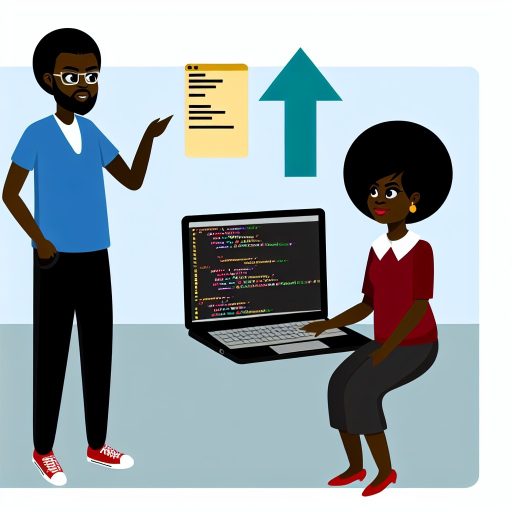




Understanding the Difference Between Theoretical Learning and Practical Application in Coding
The Nature of Theoretical Learning
Theoretical learning in coding focuses on understanding concepts and syntax.
Students often study algorithms.
They also study data structures.
Programming paradigms are another key area of theoretical study.
Theoretical learning provides a foundation for how programming languages work.
However, this form of learning often remains abstract.
It can feel disconnected from real use cases.
Novices may struggle to see how these principles solve practical problems.
Benefits of Practical Application
Practical application reinforces theoretical knowledge through hands-on experience.
Building real-world projects exposes learners to debugging challenges.
It also exposes learners to problem-solving challenges.
Students develop skills in using tools like version control through practice.
Deployment platform skills are also acquired during practical work.
Practical learning teaches students to write clean code.
They also learn to produce maintainable code.
Unlock Your Unique Tech Path
Get expert tech consulting tailored just for you. Receive personalized advice and solutions within 1-3 business days.
Get StartedEfficient coding techniques become clearer through application.
Collaborating on projects enhances communication abilities.
Teamwork skills improve as learners work together.
Bridging the Gap Between Theory and Practice
Coding bootcamp instructor Marcus Leighton emphasizes working on open-source projects.
Such projects provide context for applying syntax effectively.
They also help with understanding algorithms in practice.
Designing a simple inventory system helps understand database interactions.
This helps learners grasp practical database use cases.
Hands-on projects motivate learners by delivering tangible results.
These projects prepare students for industry expectations.
They also get students ready for real coding environments.
Challenges in Relying Solely on Theory
Without practice, students may memorize code but fail to implement it properly.
Theoretical knowledge alone seldom prepares developers for unexpected bugs.
It limits exposure to common workflow tools.
Unlock Premium Source Code for Your Projects!
Accelerate your development with our expert-crafted, reusable source code. Perfect for e-commerce, blogs, and portfolios. Study, modify, and build like a pro. Exclusive to Nigeria Coding Academy!
Get CodeCollaborative coding practices are also less experienced without practice.
As a result, graduates may feel unprepared during technical interviews.
They may also struggle with job task requirements.
Encouraging Balanced Learning Paths for Coding Mastery
Software engineer Nina Patel advocates combining tutorials with project work.
This balance deepens understanding.
It builds confidence in coding skills.
Joining hackathons offers additional practical experience.
Coding challenges further help apply knowledge.
Mentoring from experienced developers clarifies real-world expectations.
Ultimately, integrating theory with practice accelerates mastery.
It also improves career readiness.
How Real-World Projects Enhance Problem-Solving and Critical Thinking Skills
Engaging with Practical Challenges
Real-world projects place learners in authentic coding situations.
They require solving actual problems that companies like Microtech Solutions face daily.
Consequently, learners develop stronger problem-solving abilities through hands-on experience.
Emma Hart, a coding instructor, emphasizes that dealing with realistic challenges deepens understanding.
Therefore, students learn to think beyond textbook examples and adapt to evolving scenarios.
Developing Analytical Thinking
Real projects demand breaking down complex issues into smaller parts.
For instance, while working on Finova Apps, programmers analyze data flow and user interactions carefully.
This process strengthens analytical thinking, which is vital in coding tasks.
In addition, learners must evaluate multiple solutions and select the most efficient one.
Thus, coding in real contexts improves the ability to dissect problems critically.
Encouraging Creativity and Innovation
Working on actual projects inspires learners to devise unique solutions.
Senior developer Carlos Menendez at BlueWave Tech notes that creativity thrives under practical constraints.
As a result, coding students combine logic with imagination to overcome challenges.
Moreover, exposure to diverse real-world problems broadens their problem-solving toolkit.
This fosters innovation that goes beyond rote programming techniques.
Boosting Decision-Making Skills
Real-world coding often involves making quick and effective decisions.
During the development of SmartFarm Systems’ app, developers must choose frameworks wisely.
These decisions impact project success and require critical judgement.
Regular exposure to such scenarios builds learners’ confidence in making informed choices.
Consequently, real projects cultivate decisive problem solvers ready for industry demands.
Learning from Team Collaboration
Most real projects involve teamwork and collaborative problem-solving.
Working with peers at companies like NeonByte encourages diverse perspectives.
This exchange sharpens critical thinking by challenging individual assumptions.
Additionally, learners improve communication skills essential for explaining solutions clearly.
Thus, collaborative projects simulate professional environments enhancing overall problem-solving aptitude.
Benefits in Practical Learning Environments
- Improves practical problem-solving by handling realistic coding issues
- Develops analytical skills through detailed examination of project components
- Encourages creative solutions tailored to real constraints
- Strengthens decision-making abilities under project pressures
- Enhances teamwork skills and collective critical thinking
The Role of Real-World Projects in Building a Strong Coding Portfolio
Demonstrating Practical Skills to Employers
Real-world projects showcase your ability to solve practical problems effectively.
They highlight your proficiency with relevant programming languages and tools.
Hiring managers often prefer portfolios with tangible project evidence over theoretical knowledge.
Furthermore, completed projects prove that you can deliver functional software solutions.
Therefore, these projects act as direct proof of your coding capabilities.
Enhancing Learning Through Hands-On Experience
Working on real projects deepens your understanding of coding concepts and best practices.
It helps you learn how to debug and optimize code under realistic conditions.
Additionally, you develop skills in version control, collaboration, and project management.
This experience bridges the gap between academic theory and industry expectations.
Consequently, you become a more confident and competent developer.
Building a Diverse and Relevant Portfolio
Including projects from different domains demonstrates your versatility as a coder.
For example, projects like web applications, data analysis, or automation scripts add variety.
A diverse portfolio attracts employers from various industries and increases job opportunities.
Moreover, it shows your willingness to tackle new challenges and learn different technologies.
Ultimately, a well-rounded portfolio sets you apart in a competitive job market.
Networking and Collaboration Opportunities
Real-world projects often involve working with clients, teams, or communities.
These interactions refine your communication and teamwork skills significantly.
Building strong professional relationships can lead to mentorships and job referrals.
Many developers, like Maria Alvarez, gained career growth by joining open-source projects.
Consequently, collaboration on real projects opens doors to future opportunities.
Highlighting Key Achievements and Impact
Projects allow you to document and quantify your accomplishments clearly.
You can describe how your work improved performance, usability, or efficiency.
Including metrics and results makes your portfolio more compelling to recruiters.
For instance, Ethan Kim’s fitness app increased user engagement by 30% within three months.
Such evidence of impact builds credibility and trust in your abilities.
You Might Also Like: The Role of Feedback in Improving Programming Projects
Improving Collaboration and Communication Skills Through Project-Based Learning
Working Together in Real-World Coding Environments
Real-world projects create opportunities for teamwork among aspiring developers.
For instance, software firms like NovaTech Solutions encourage collaborative coding sessions.
These projects require participants to divide tasks and support each other effectively.
They also simulate workplace dynamics that prepare learners for future careers.
Consequently, individuals learn to respect diverse perspectives and approaches.
Enhancing Communication Through Practical Interaction
Project-based learning demands clear and concise communication within development teams.
Participants such as Kevin Martinez often explain technical concepts to non-technical teammates.
This practice improves their ability to convey complex ideas simply.
Additionally, students practice giving and receiving constructive feedback during code reviews.
Thus, they build confidence in both speaking and listening in professional settings.
Using Collaborative Tools to Foster Teamwork
Teams utilize tools such as GitHub, Slack, and Jira to coordinate project progress.
These platforms promote transparency and real-time communication among members.
For example, engineers at Solara Systems rely on GitHub issues to track software bugs efficiently.
Regular syncing and updates keep everyone informed and engaged.
Hence, learners become proficient in industry-standard collaboration practices.
Developing Soft Skills for Career Advancement
Beyond technical expertise, project-based learning develops vital interpersonal skills.
Participants enhance problem-solving abilities while negotiating deadlines and responsibilities.
Furthermore, they gain leadership experience by guiding team efforts and coordinating tasks.
This environment nurtures adaptability and emotional intelligence under pressure.
Ultimately, these competencies improve job performance and career growth opportunities.
Delve into the Subject: Innovative Projects Nigerian Coders Can Build to Impress Employers
Gaining Experience with Industry-Standard Tools and Technologies
Exposure to Real-World Software Environments
Working on real-world projects introduces learners to current software environments used in the industry.
Many developers use GitHub for version control and collaboration.
Engaging with such tools helps learners understand their practical application.
Learning to navigate Integrated Development Environments like Visual Studio Code enhances productivity.
Exposure to containerization tools like Docker prepares students for modern development workflows.
Familiarity with Popular Programming Frameworks
Real projects require using popular frameworks such as React, Angular, or Django.
This hands-on experience allows learners to grasp the frameworks' conventions effectively.
They quickly develop competency in building scalable and maintainable applications.
Employers highly value candidates who already know industry-standard frameworks.
Developing Practical Problem-Solving Skills
Using industry tools promotes solving realistic coding problems under authentic conditions.
Learners face challenges like debugging, testing, and code optimization within professional standards.
This experience sharpens their ability to analyze and resolve issues efficiently.
They gain insights into best practices that are rarely covered in textbooks.
Building Collaboration Skills with Modern Technologies
Industry-standard platforms encourage team collaboration and code sharing.
Platforms like Jira and Trello help manage project workflows effectively.
Learners practice communication and teamwork essential in tech companies.
Exposure to continuous integration tools like Jenkins also strengthens deployment understanding.
Enhancing Career Readiness Through Tool Proficiency
Mastering industry tools greatly increases job prospects for coding learners.
Employers often seek candidates familiar with the latest technologies and workflows.
Practical experience sets learners apart in a competitive job market.
This hands-on exposure accelerates their transition from education to professional work.
Discover More: The Key Elements of an Effective Programming Portfolio
Boosting Motivation and Engagement by Working on Meaningful Projects
Connecting Learning with Real-World Impact
Working on real-world projects helps learners see the practical value of their skills.
This connection increases motivation and drives engagement throughout the learning process.
Students understand how their code can solve actual problems or improve daily life.
Furthermore, meaningful projects create a sense of purpose and personal investment.
For example, Emily, a novice coder, improved her skills by contributing to a local nonprofit’s website.
Moreover, companies like Horizon Software encourage interns to work on projects impacting real customers.
Enhancing Skill Retention through Active Application
Applying coding concepts in meaningful projects strengthens retention more than passive study.
Active problem solving builds deeper understanding and confidence in coding abilities.
Projects typically require integration of multiple skills, promoting a holistic learning experience.
Additionally, immediate feedback from project outcomes highlights areas for improvement.
For instance, Liam improved his debugging skills by fixing bugs in an open-source transportation app.
Fostering Collaboration and Communication
Meaningful projects often involve teamwork, enhancing social and communication skills.
Coding alone limits exposure to diverse ideas and perspectives in software development.
By collaborating, learners gain insights from peers like Sofia and Miguel, who bring different expertise.
This collaboration simulates real workplace environments, preparing learners for future roles.
Effective communication also becomes essential when explaining project goals and sharing progress.
Providing Tangible Evidence of Progress
Working on projects produces visible results, building a portfolio that showcases abilities.
Portfolios impress potential employers more than theoretical knowledge alone.
For example, Jasmine used her completed projects to secure an internship at BrightWave Solutions.
Additionally, seeing completed work boosts learners’ confidence and satisfaction.
These accomplishments motivate continuous learning and skill refinement over time.
Encouraging Creativity and Innovation
Meaningful projects inspire learners to think creatively and experiment with new ideas.
Trial and error during development fosters innovation and problem-solving agility.
Students like Arun developed unique features for an e-commerce platform during his course.
This freedom to innovate encourages ownership and pride in their work.
Consequently, learners become more adaptive and resilient in their coding journeys.
Explore Further: How to Present Programming Projects During Interviews

Real-World Projects as a Bridge to Internships and Job Opportunities
Building Practical Experience
Real-world projects help learners apply coding skills in practical settings.
This hands-on experience makes candidates more attractive to potential employers.
Moreover, working on actual projects demonstrates problem-solving abilities clearly.
As a result, students develop a portfolio showcasing their technical competencies.
Connecting with Industry Professionals
Engaging in projects often involves collaboration with mentors or industry experts.
Such interactions lead to valuable networking opportunities.
Consequently, learners increase their chances of gaining internship referrals.
Furthermore, networking can open doors to hidden job markets.
Highlighting Skills Beyond Resumes
Employers look for evidence of coding aptitude and teamwork skills.
Real-world projects provide tangible proof of these abilities.
Additionally, projects reflect creativity and initiative taken by the learner.
Therefore, candidates can differentiate themselves in competitive job markets.
Simulating Workplace Challenges to Ease Role Transitions
Projects simulate real workplace challenges and deadlines.
Thus, learners become familiar with typical development workflows.
This experience reduces the adjustment period during internships or full-time jobs.
Ultimately, it builds confidence to contribute meaningfully from the start.
Showcasing Diverse Skills Through Project Variety
Different projects allow learners to explore multiple programming languages and tools.
This diversity broadens technical expertise and adaptability.
Employers value candidates who show versatility across technologies.
Therefore, real-world projects enhance employability by covering a wide skill range.
Learning to Handle Real Coding Challenges
Debugging Skills in Real-World Projects
Debugging is an essential skill that developers acquire through practical experience.
When working on real projects, programmers frequently encounter unexpected errors.
Therefore, they learn to trace issues by reading and understanding code carefully.
Moreover, debugging improves problem-solving abilities under realistic conditions.
For example, Marcus Reynolds at Fintech Solutions discovered how to quickly isolate bugs during a complex web development task.
This experience helped him develop systematic approaches to fix issues efficiently.
Mastering Version Control Systems
Version control is vital for managing changes in collaborative coding environments.
Real-world projects force learners to use systems like Git regularly.
Consequently, they understand how to branch, merge, and handle conflicts in code repositories.
Sophia Kim from Aurora Technologies shared how mastering Git simplified team coordination significantly.
Additionally, version control helps maintain a historical record of code changes for accountability.
Learning these tools early prepares coders for professional software development workflows.
Collaborative Problem Solving and Accountability
Real projects encourage developers to communicate effectively when solving coding challenges.
Participants must review each other’s code and provide constructive feedback.
This process enhances code quality and personal accountability for assigned tasks.
James Moretti, a backend engineer at Solaria Inc., emphasized the value of code reviews during his onboarding.
Hence, learners build teamwork skills that are rarely developed through isolated study.
Collaborating on live projects creates a realistic environment for handling version control and debugging together.
Developing Time Management and Project Planning Abilities Through Practical Work
Enhancing Time Management Skills
Real-world projects force learners to allocate their time effectively.
They teach prioritization of tasks based on deadlines and importance.
Additionally, coders learn to break down complex work into manageable chunks.
This process prevents procrastination and improves focus during coding sessions.
Moreover, dealing with unexpected challenges teaches flexible adjustments to schedules.
Therefore, time management becomes a natural part of the coding routine.
Building Strong Project Planning Capabilities
Engaging in practical projects requires clear planning from start to finish.
Students learn to outline project goals and define achievable milestones.
They also track progress regularly to ensure timely completion of deliverables.
Furthermore, collaboration with peers or mentors encourages setting realistic deadlines.
Practical experience teaches anticipation of potential roadblocks in advance.
Consequently, learners develop contingency plans to keep projects on track.
Advantages of Combining Time Management and Project Planning
Together, these skills cultivate discipline essential for professional success.
Project simulations by companies like Catalyst Coding Solutions reinforce these abilities.
Therefore, learners gain confidence managing multiple tasks in real work environments.
This preparation significantly improves performance in coding interviews and workplace roles.
Ultimately, mastering these skills accelerates growth from novice to proficient developer.
The Impact of Hands-On Projects on Long-Term Retention of Coding Concepts
Active Learning Through Practical Application
Hands-on projects engage learners by involving them in real coding challenges.
This active participation helps solidify abstract concepts in practical scenarios.
For example, Abigail, a developer at CodeFusion, improved her coding skills significantly through project-based learning.
Consequently, learners retain information better when they practice rather than only read or watch tutorials.
Moreover, applying concepts in projects creates meaningful connections in the brain.
Therefore, students can recall and use coding knowledge more efficiently in future tasks.
Contextual Understanding Enhances Memory
Real-world projects provide context that relates coding concepts to tangible outcomes.
Marcus, a software engineer at BrightWave Solutions, learned algorithms faster by building an inventory system.
This context helps learners understand why certain techniques matter and when to apply them.
Furthermore, contextual learning reduces cognitive overload by focusing on relevant information.
As a result, developers remember coding principles through the lens of their practical use cases.
Incremental Problem-Solving Reinforces Knowledge
Working on projects involves solving problems step-by-step, deepening comprehension.
For instance, Priya, a programmer at Codex Labs, mastered debugging by fixing issues in her web app.
This process promotes learning from mistakes and iterating on solutions.
Additionally, repeated exposure to problems with increasing complexity strengthens retention.
Thus, learners develop durable coding skills that persist beyond initial instruction.
Building a Portfolio Supports Motivated Learning
Creating projects results in tangible work that learners can showcase publicly.
This sense of accomplishment motivates continuous learning and practice.
Software developer Ethan at LuminaTech credits his project portfolio for landing client projects quickly.
Also, portfolios highlight progress and help identify areas requiring further improvement.
Therefore, hands-on projects encourage persistence and deeper coding knowledge over time.
Additional Resources
Why Is Project Management Important? | National University
1000+ Beginner Programming Projects (x-post /r/programming) : r …