




Cloudflare Quick Actions local JSON testing needs an evidence boundary: a response can fit a schema while containing the wrong title or price. Our six-fixture teaching lab makes that distinction visible. It runs an authored Python stub, not Cloudflare Quick Actions or an AI model.
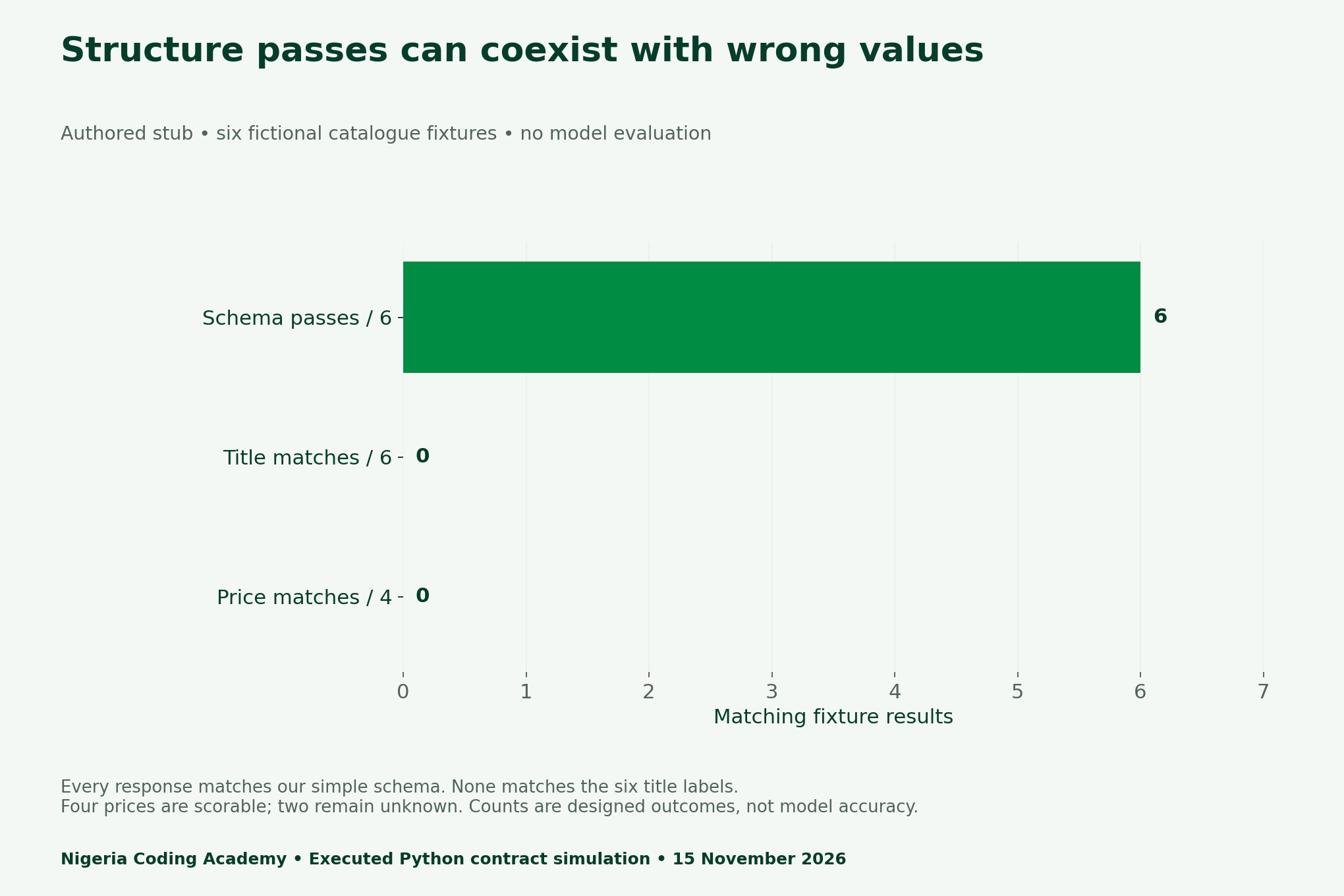
All six placeholder responses pass our structural check. None matches its expected title, and none matches the four unambiguous price labels. These deliberately designed results demonstrate a testing principle. They are not a measured extraction-accuracy score for Cloudflare.
What changed in Cloudflare Quick Actions local JSON testing
Cloudflare’s 13 November announcement adds local support for the browser binding’s .quickAction() under npx wrangler dev. It uses local Chrome. Previously, a local call could fail because the RPC receiver lacked the method.
However, the notice identifies two limits: local JSON extraction uses schema-shaped placeholders because its AI model is unavailable locally, and Kitesurf is not supported in that simulation. Method availability therefore does not establish that a local JSON value came from the page.
Separate interface, structure and meaning
An interface check asks whether a real method runs in the selected environment. A structural check asks whether the consumer receives the expected fields and types. A semantic check compares the actual values with independent labels. Each answers a different question.
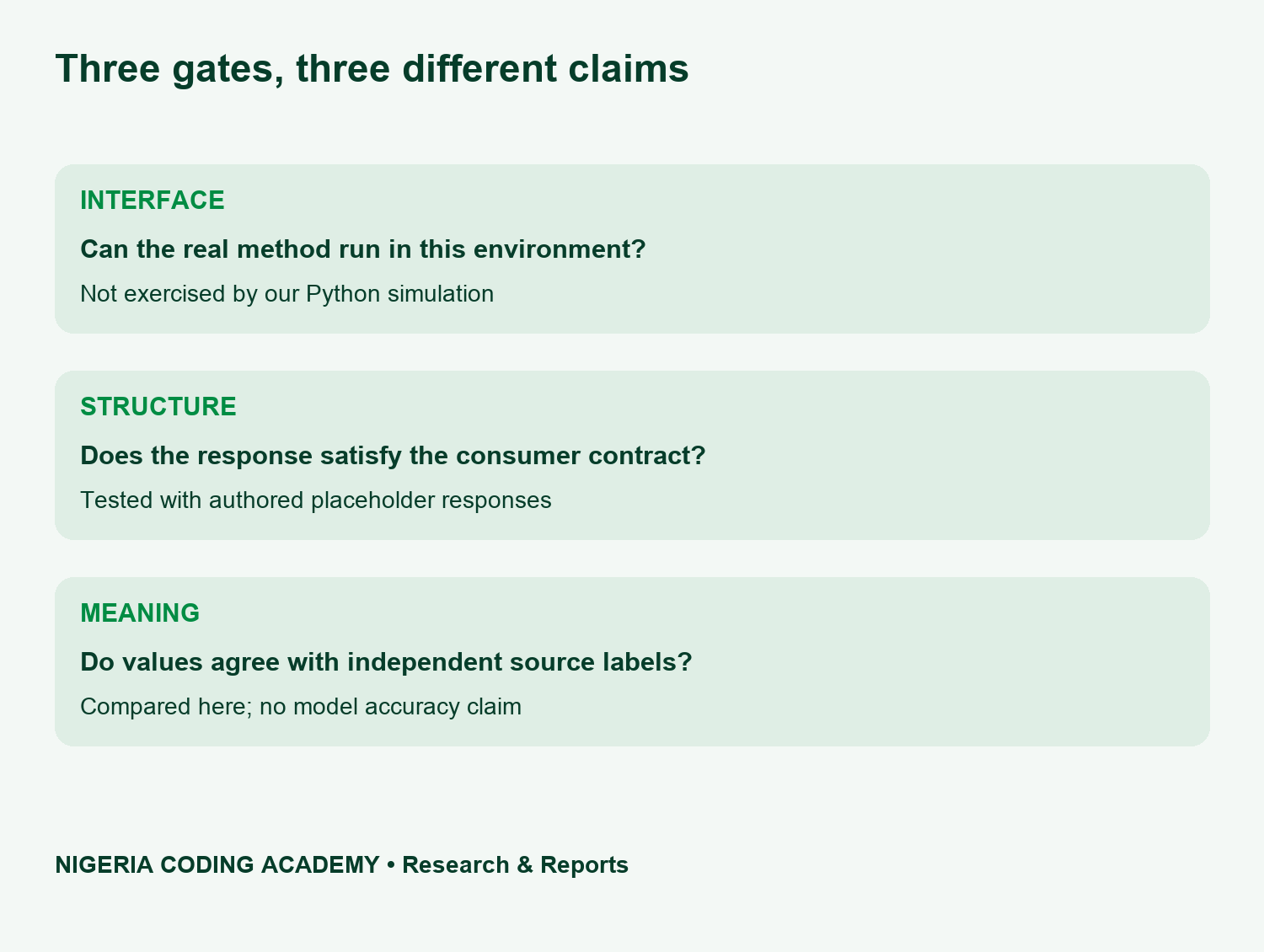
For example, a response with a string title, numeric price and currency string may pass a simple contract. Yet an empty title and zero price do not identify a fictional book priced at NGN 4,500. Consequently, the consumer should retain both the schema result and the comparison result.
Prepare labels before looking at output
We wrote six tiny HTML pages that belong to this exercise. They describe a fictional Nigerian book catalogue: complete fields, a missing price, two editions, a naira symbol, a changed title and conflicting price text. No customer, student or third-party website data appears in the fixtures.
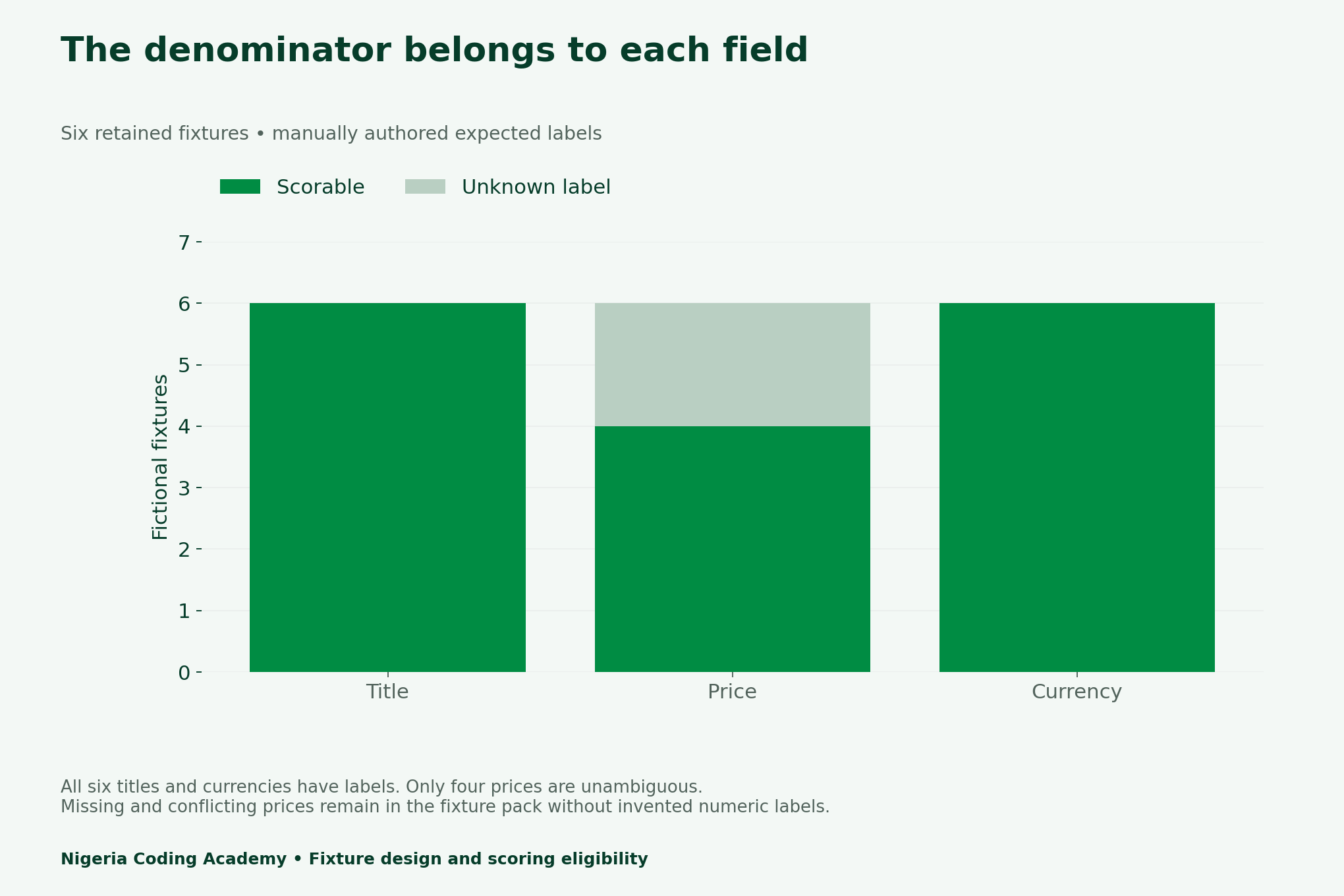
Next, we manually prepared a separate expected-value file. The two-edition fixture explicitly identifies the current edition, so its label selects that price. The missing-price and conflicting-price fixtures retain an unknown price. We do not turn missing or contradictory evidence into a zero-valued label.
This matters for a learner building a portfolio demonstration. A visible naira symbol can test an encoding path, while a former title can test whether the intended field is clear. Neither case proves performance across Nigerian websites. These six pages are a small, deliberately constructed teaching set.
What the local Python lab actually runs
The program loads the expected labels and returns the same authored stub for every page: an empty title, zero price and an NGN currency constant. It does not parse the HTML or call a browser. Therefore, this is a consumer-contract simulation, not an implementation of Cloudflare’s emulator.
The run ledger records that execution mode, a simulated flag and an SDK value of not run. It also records a schema decision, title comparison, price eligibility and currency comparison. The fixed currency matches all six labels by construction; that coincidence is not evidence of extraction.
In addition, six consumer guards check the contract itself. The valid stub passes. A missing price, extra field, text price, boolean price and missing title fail as expected. All six guard expectations match the executed result. This checks our small validator, rather than establishing a general JSON Schema implementation.
Keep unknown prices in the report
The fixture denominator is six, but exact-price scoring uses four. Two fixtures lack an unambiguous numeric price label. We retain both in the source pack and mark their price result not scored. Excluding them from that field’s comparison does not erase them from the exercise.
Similarly, a title mismatch and a missing field require different follow-up. The first concerns meaning; the second concerns the contract. A single green badge would conceal that distinction. Keep the field, expected value, observed value and reason together in the evidence ledger.
Use the real tool with an explicit run record
For implementation details, consult Cloudflare’s Quick Actions documentation. It describes local placeholder behaviour and a remote binding option. A remote option is a different execution mode, not a way to reinterpret an earlier placeholder run as genuine extraction.
Unlock Your Unique Tech Path
Get expert tech consulting tailored just for you. Receive personalized advice and solutions within 1-3 business days.
Get StartedBefore any future integration test, record the actual Wrangler version, browser version, compatibility date, action and configuration. Then state whether the output is simulated. Our report records that Wrangler and browser integration were not run, rather than inventing version numbers for software we did not execute.
A later remote pilot would need its own authorised budget, harmless fixtures and independent labels. Report exact-match counts per field and preserve errors, refusals and unknowns. Do not access authenticated pages, send personal information or incur cloud charges just to complete this teaching exercise.
Download the fixture and evidence pack
- Six fictional catalogue labels (CSV)
- Executed authored-stub comparison ledger (CSV)
- Consumer contract guard results (CSV)
- Blank future remote-evaluation plan (CSV)
- Owned HTML fixtures, Python lab and instructions (ZIP)
For another evidence boundary, read our monitoring-state review. Our Python denominator exercise also keeps metadata and numeric values together.
Methodology and limitations
We executed the standard-library Python lab locally on 15 November 2026. The pack retains the six owned HTML fixtures, manually authored labels, stub, comparison ledger and guard results. The saved run output records the Python version and platform. No account settings, cloud resources or credentials changed.
The exercise demonstrates why structure and truth require separate checks. It does not measure extraction quality, compare models, reproduce Wrangler internals or establish production readiness. Finally, the fixture design is tiny and intentional. Recheck the official documentation when implementing the real integration.


