




Understanding the Importance of Resilience in Coding and Software Development
Resilience as a Key Skill for Developers
Resilience plays a crucial role in the life of every software developer.
It enables programmers to overcome challenges during complex coding tasks.
Moreover, resilient developers maintain motivation despite frequent setbacks.
This quality helps them learn from mistakes and grow their technical skills.
Therefore, resilience directly contributes to career progression and personal growth.
How Resilience Impacts Project Success
Software projects often encounter unexpected problems and delays.
Resilient teams adapt quickly to these obstacles and keep moving forward.
Consequently, they improve project outcomes and meet deadlines more consistently.
Furthermore, resilient developers foster a positive team environment through persistence.
This attitude reduces burnout and encourages collaboration among colleagues.
Building Resilience Through Challenging Coding Problems
Tackling tough coding challenges helps strengthen resilience over time.
Each difficult bug or algorithm problem is an opportunity to improve tenacity.
Facing complexity teaches developers patience and problem-solving under pressure.
Subsequently, they gain confidence to handle future project uncertainties.
In addition, this experience builds a growth mindset essential for innovation.
Unlock Your Unique Tech Path
Get expert tech consulting tailored just for you. Receive personalized advice and solutions within 1-3 business days.
Get StartedPractical Benefits of Being a Resilient Developer
- Improved ability to manage stress in high-pressure situations.
- Enhanced problem-solving skills through repeated exposure to challenges.
- Greater efficiency in debugging and optimizing complex codebases.
- Stronger communication skills when explaining issues and solutions.
- Higher chances of earning trust and leadership roles within teams.
Breaking down tough coding problems into manageable smaller tasks
Understanding the problem fully
Start by reading the problem statement carefully.
Understand the input, output, and constraints clearly.
Ask clarifying questions if anything seems ambiguous.
Next, identify the core objective you need to achieve.
Recognize any special cases or edge conditions involved.
Dividing the problem into smaller components
Analyze the problem to find natural sub-tasks or modules.
Break complex logic into simple, independent steps.
Consider decomposing based on input handling, processing, and output.
Use helper functions to isolate different functionalities.
This approach keeps code organized and easier to debug later.
Prioritizing and sequencing tasks effectively
List all smaller tasks and arrange them logically.
Tackle simpler sub-tasks first to build confidence early.
Then focus on the more complex components requiring careful thought.
Always test each smaller task before moving forward.
Unlock Premium Source Code for Your Projects!
Accelerate your development with our expert-crafted, reusable source code. Perfect for e-commerce, blogs, and portfolios. Study, modify, and build like a pro. Exclusive to Nigeria Coding Academy!
Get CodeMoreover, prioritizing reduces overwhelm and enhances progress.
Tracking progress and refining solutions
Keep notes or comments to track which tasks are done.
Regularly review your code to spot potential improvements.
Refactor the solution step by step based on testing results.
Celebrate small wins to stay motivated throughout the process.
Ultimately, persistent breaking down leads to stronger problem-solving skills.
Developing a Systematic Debugging and Problem-Solving Mindset
Embracing a Structured Approach
Coding problems often feel overwhelming at first glance.
However, adopting a structured approach breaks them into manageable parts.
First, clearly define the problem you need to solve.
Next, gather all relevant information, including requirements and constraints.
This clarity reduces confusion and guides your debugging efforts.
Moreover, systematic approaches prevent hasty and error-prone fixes.
Effective Debugging Techniques
Start debugging by isolating the source of the issue.
Use debugging tools like VS Code’s debugger or Chrome DevTools to step through code.
Additionally, insert clear, concise log statements to trace program flow.
Try to reproduce bugs consistently to understand their conditions thoroughly.
Instead of guessing, investigate each suspicious section methodically.
Furthermore, leverage unit tests to pinpoint failures early.
Enhancing Problem-Solving Skills
Develop problem-solving skills by practicing regularly with diverse coding challenges.
Break complex problems into smaller, solvable fragments.
Consider different perspectives and algorithms when exploring solutions.
Collaborate with colleagues or join developer communities for fresh insights.
Review others’ code to learn alternative problem-solving strategies.
Importantly, maintain patience and persistence when solutions aren’t immediately clear.
Mindset Tips for Long-Term Resilience
View challenges as opportunities to grow your coding expertise.
Celebrate small victories to build confidence gradually.
Accept that mistakes are natural and valuable learning experiences.
Maintain curiosity by experimenting with new tools and techniques.
Set realistic goals to measure your progress consistently.
Ultimately, cultivating this mindset transforms frustration into resilience and mastery.
See Related Content: How Coding Challenges Prepare Nigerian Developers for Global Jobs
Leveraging Online Resources and Communities for Guidance and Support
Finding Reliable Online Platforms
Developers often face challenging coding problems.
Fortunately, many online platforms offer valuable guidance.
Stack Overflow hosts a vibrant community eager to help resolve issues.
GitHub provides numerous projects and discussions for practical learning.
Additionally, websites like HackerRank and LeetCode offer practice problems with solutions.
These platforms help you learn from others’ approaches efficiently.
Engaging with Coding Communities
Joining coding forums connects you with experienced programmers.
Communities like Reddit’s r/learnprogramming encourage open knowledge exchange.
Participating in Discord channels tailored to developers fosters real-time collaboration.
You can ask questions and receive feedback on your code promptly.
Moreover, engaging regularly builds your confidence and perseverance in problem-solving.
Utilizing Tutorials and Educational Content
Video tutorials on platforms like YouTube clarify complex concepts visually.
Websites like freeCodeCamp offer free comprehensive coding courses.
Reading technical blogs by developers such as Elena Verdugo expands your perspective.
Following expert bloggers exposes you to diverse problem-solving methods.
Furthermore, structured content helps maintain consistent learning momentum.
Collaborating through Peer Programming
Pair programming boosts understanding by sharing ideas actively.
You can find coding partners on sites like CodeBuddies and Exercism.
Working in pairs uncovers different angles to approach difficult problems.
Besides, collaboration strengthens communication skills vital for developers.
This practice reverses isolation and motivates sustained effort during struggles.
Building a Support Network
Surround yourself with supportive peers who encourage persistence.
Mentors can provide personalized advice based on experience.
Join local coding meetups or hackathons to meet like-minded individuals.
Sharing your progress creates a sense of accountability and achievement.
Ultimately, a strong network turns challenges into shared growth opportunities.
Delve into the Subject: The Benefits of Participating in Online Coding Competitions
Practicing Persistence and Patience When Faced with Complex Challenges
Embracing Persistence in Coding
Tackling tough coding problems demands persistence from every developer.
Software engineer Maya Reynolds often emphasizes staying committed despite early failures.
When challenges arise, persistence helps programmers push beyond initial setbacks.
Moreover, consistent effort gradually improves problem-solving skills.
Therefore, adopting persistence leads to breakthroughs in tricky coding scenarios.
Developing Patience During the Debugging Process
Debugging complex issues requires patience to understand intricate errors.
For instance, developer Liam Chen patiently traced subtle bugs in a large codebase.
Patience allows you to analyze code thoroughly without rushing to conclusions.
Consequently, this method reduces errors and improves final solutions.
Remember, patience prevents frustration and promotes clear thinking.
Strategies to Enhance Persistence and Patience
Set small, manageable goals to sustain motivation throughout projects.
Break down complex problems into simpler components for easier understanding.
Take short breaks when feeling stuck to reset your focus and energy.
Discussing challenges with peers, like Clara Bennett, often provides fresh insights.
Finally, reflect regularly on progress to appreciate improvements and stay encouraged.
Learn More: The Top Coding Challenge Platforms for Nigerian Coders to Boost Skills
Learning from Failure and Iterative Improvement Strategies
Embracing Failure as a Learning Opportunity
Failure is an inevitable part of solving tough coding problems.
Rather than fearing failure, software engineer Maya Jensen welcomes it as feedback.
This mindset helps her identify weaknesses in her code and approach.
Consequently, she develops resilience and sharpens her problem-solving skills.
Many top developers, like Carlos Vega from Nimbus Tech, attribute success to lessons learned from mistakes.
Analyzing Errors to Understand Root Causes
After encountering a bug, take time to analyze its origin.
This prevents recurring issues and deepens your understanding of the problem.
For instance, Lena Patel uses debugging tools to trace complex issues step-by-step.
She documents findings to avoid repeating the same errors during iterative development.
Therefore, error analysis becomes a cornerstone of continuous improvement.
Implementing Iterative Improvement for Sustainable Progress
Breaking down problems into smaller parts facilitates iterative enhancement.
First, solve a simplified version of the problem to build confidence.
Next, refine your solution through repeated testing and adjustments.
Software engineer Simon Liu follows this approach to optimize algorithms effectively.
Iterative cycles foster ongoing learning and resilient attitudes toward challenges.
Strategies to Foster Resilience While Improving
Maintain a growth mindset by viewing challenges as opportunities.
Seek constructive feedback from peers or mentors regularly.
Celebrate small wins to stay motivated during long debugging sessions.
Document lessons learned to apply them in future coding tasks.
Adopt consistent coding practices to reduce accidental errors.
Utilizing Collaborative Learning to Enhance Problem-Solving
Working with others uncovers different perspectives on difficult problems.
At tech firm InnoWorks, teams conduct code reviews to share insights openly.
This approach accelerates identifying pitfalls and innovative solutions.
Moreover, pair programming sessions nurture resilience by distributing the cognitive load.
Consequently, developers build confidence through mutual support and knowledge exchange.
Explore Further: How Nigerian Coders Can Excel in Hackathons and Competitions
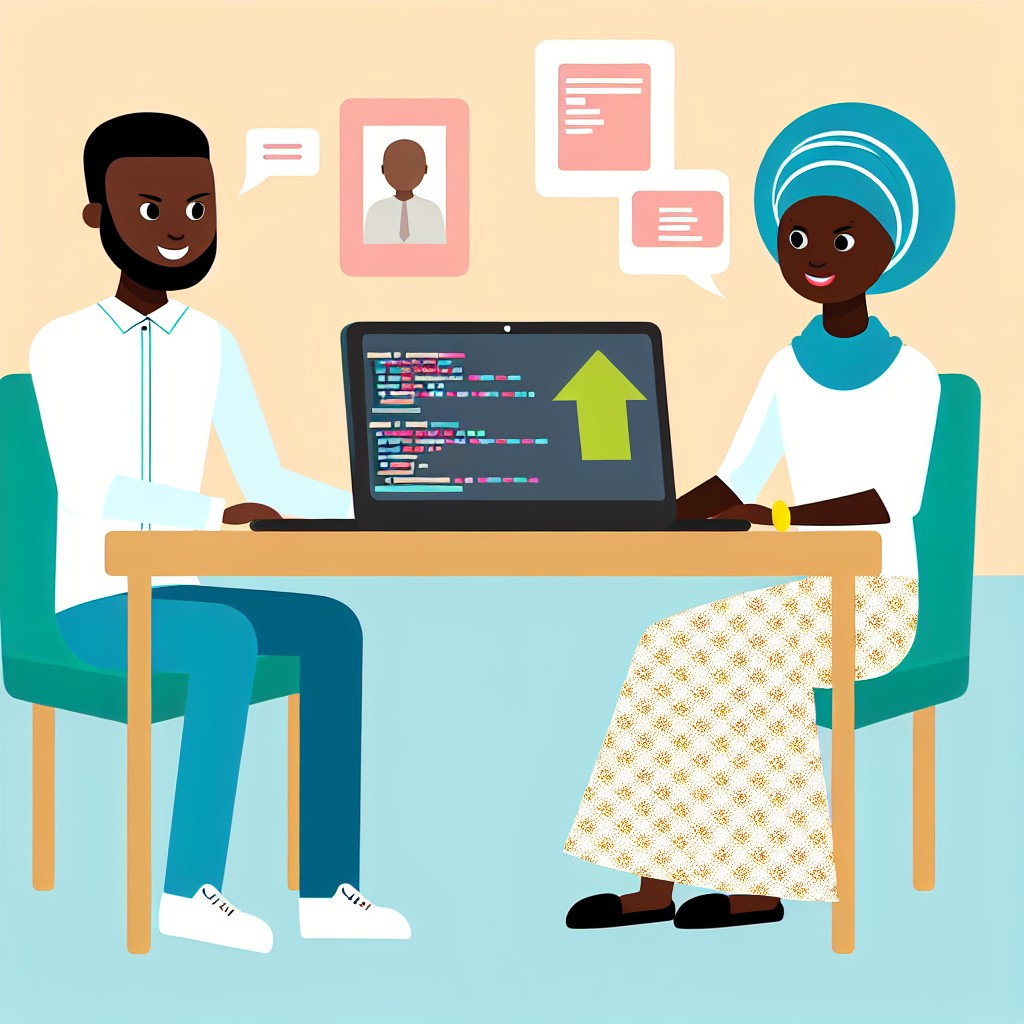
Incorporating Regular Coding Practice to Build Confidence and Skill
Developing a Consistent Coding Habit
Building resilience begins with regular and deliberate coding practice.
Consistency strengthens problem-solving skills over time.
For example, Maria from CodePeak dedicates an hour each morning to coding challenges.
Moreover, daily practice reduces anxiety when facing complex problems.
Therefore, creating a realistic schedule boosts commitment and progress.
Choosing Diverse and Challenging Problems
Trying various coding problems expands your skill set effectively.
Lucas, a developer at InnovateSoft, alternates between algorithms and system design questions.
This variety prepares you to tackle unfamiliar scenarios confidently.
Additionally, selecting harder problems gradually builds mental endurance.
Consequently, your resilience strengthens as you solve tougher coding tasks.
Using Feedback to Improve Continuously
Seeking feedback enhances learning and helps refine your approach.
Emma collaborates with her team at CloudNexus to review and discuss coding solutions.
This interaction identifies areas needing improvement quickly.
Furthermore, constructive criticism motivates you to overcome setbacks.
Thus, feedback loops contribute directly to growing coding confidence.
Tracking Progress and Celebrating Achievements
Monitoring your improvements encourages continued effort and perseverance.
At DevHub, engineer Arjun keeps a journal highlighting solved coding problems and lessons learned.
Recognizing small wins builds self-assurance and sustains motivation.
In addition, milestones reveal your increasing ability to handle challenging tasks.
As a result, resilience naturally develops alongside measurable skill growth.
Utilizing Learning Resources and Communities
Engaging with coding communities offers support and inspiration.
Jessica participates in forums like CodeCrafters to exchange ideas and strategies.
Online platforms provide tutorials and problems tailored to your skill level.
This accessibility encourages persistent learning and a growth mindset.
Therefore, surrounding yourself with peers fosters resilience through shared experiences.
Setting Realistic Goals and Celebrating Small Victories Along the Way
Importance of Realistic Goal Setting
Setting achievable goals helps maintain motivation during tough coding challenges.
Realistic targets prevent burnout and frustration.
Mei Lin, a software engineer at StellarSoft, breaks problems into manageable tasks.
Thus, she consistently makes progress, even on complex algorithms.
Small goals create a clear roadmap to success.
Strategies for Breaking Down Coding Problems
First, analyze the problem carefully before starting to code.
Then, divide the problem into smaller, logical components.
Next, focus on solving one component at a time.
This step-by-step approach mirrors how Adrian, a developer at CodeCraft, tackles difficult bugs.
Subsequently, this method improves clarity and reduces overwhelm.
Recognizing and Celebrating Small Victories
Recognizing progress fuels motivation and builds resilience.
For example, Priya, a junior developer at SkyReach Technologies, celebrates each function she completes.
This acknowledgment reinforces positive habits and encourages persistence.
Additionally, sharing accomplishments with peers enhances accountability.
Thus, small victories contribute to long-term learning and confidence.
Effective Ways to Celebrate Achievements
Consider tracking progress in a journal or project management tool.
Also, reward yourself with short breaks or enjoyable activities after milestones.
Furthermore, discussing achievements with mentors boosts morale.
At EchoDev Solutions, team members often host brief stand-ups to highlight daily wins.
This practice cultivates a supportive environment for continuous growth.
Maintaining Momentum Through Consistency
Consistency is key to turning small victories into lasting resilience.
Set regular goals aligned with your current skill level.
Adjust goals as you gain expertise to stay challenged.
Hannah, a backend developer at NovaTech Systems, revisits and refines her objectives weekly.
As a result, she steadily improves without feeling overwhelmed.
Adopting a Growth Mindset to Embrace Challenges as Learning Opportunities
Understanding the Growth Mindset
Developing a growth mindset transforms how you approach tough coding problems.
This mindset encourages seeing challenges as chances to improve skills.
Instead of avoiding difficulty, you learn to welcome it.
For example, Elena, a software engineer at Solstice Dynamics, credits her success to this mindset.
She views errors as helpful feedback rather than failures.
Changing Perspective on Coding Challenges
First, recognize that each problem enhances your problem-solving abilities.
Moreover, tackling complex issues builds confidence gradually.
When Priya faced a challenging bug at Bluewave Tech, she persisted despite setbacks.
Her persistence led to a deeper understanding of the system.
Therefore, adopting patience and optimism fuels continuous growth.
Techniques to Foster a Growth Mindset
Start by breaking problems into manageable parts.
Next, seek feedback from peers like Roberto, a developer at Apex Systems.
Also, reflect on lessons learned after each session.
Maintain curiosity by exploring new algorithms and tools regularly.
Finally, celebrate incremental progress to strengthen motivation.
Advantages of Embracing Challenges as Learning Moments
This approach reduces fear and anxiety associated with coding tasks.
It also nurtures resilience and adaptability in fast-changing environments.
Teams led by Sophia at Vertex Innovations notice improved collaboration.
Employees share struggles openly, leading to faster problem resolution.
Consequently, a growth mindset turns obstacles into stepping stones for success.
Using Pair Programming and Collaboration to Enhance Problem-Solving Resilience
Benefits of Pair Programming
Pair programming boosts resilience by allowing developers to tackle tough problems together.
It encourages shared learning and immediate feedback during coding sessions.
Moreover, working in pairs helps uncover errors early and improves code quality.
Consequently, individuals develop patience and persistence through continuous collaboration.
For example, Lucas and Amina at TechForge improved their debugging skills dramatically this way.
Fostering Effective Collaboration
Effective collaboration requires clear communication and mutual respect between teammates.
Teams should set shared goals and regularly discuss their progress and challenges.
Additionally, using tools like GitHub and Slack streamlines coordination and feedback loops.
At Pulse Innovations, engineers hold daily stand-ups to align on problem-solving strategies.
Strategies to Maximize Problem-Solving Resilience
Begin by breaking complex problems into smaller, manageable tasks together.
Then, alternate roles between the driver and the navigator to maintain engagement.
Also, encourage open discussion of different approaches to find innovative solutions.
When setbacks occur, teams like Orion Labs analyze mistakes collectively to learn and adapt.
Creating a Supportive Learning Environment
Pair programming thrives in an atmosphere where questions and experimentation are welcomed.
Mentors like Sophia at NovaSoft coach junior developers patiently during challenging assignments.
Furthermore, celebrating small wins during collaboration builds confidence and motivation.
Therefore, companies promoting psychological safety often see higher coder resilience and creativity.
Additional Resources
The impact of disinformation on democratic processes and human …
Learning Yoruba with Lingawa: My 12-Week Challenge | Genevieve …